Travel insurance fails by design: slow reimbursement and insurers counting on you giving up. The real numbers from one of the world's busiest travel markets — and what the Asteroid model changes.
Brazil's travel insurance market — one of the world's largest and a revealing case study — is valued at R$2.8 billion (≈US$520 million) a year (2025), and it represents a remarkable paradox: a product essential to the safety of millions of travelers, widely perceived as bureaucratic and inefficient. Although international travel demand has grown consistently — 8.3 million international departures in 2024 (source: ANAC, Brazil's civil aviation agency) — average satisfaction with claims processes and policy clarity remains poor, as indicated by more than 15,000 annual complaints on Brazil's main consumer complaint board for the travel insurance sector in 2025.
The failure is not in the traveler's intent to seek protection, but in the product's prevailing structure and its claim mechanisms. What follows is a quantitative, structural analysis of the critical failures — and the potential fixes.
The Structural Dysfunction: Four Pillars of Dissatisfaction
1. Post-Claim Bureaucracy: The Reimbursement Bottleneck
The insured's main source of frustration emerges at claim time. The traditional reimbursement model demands an exhaustive collection of documents, invoices and medical reports, often in a foreign language and under stress. - Data point: Internal research (source: Asteroid, 2026) found that 65% of users abandon low-value claims (under ≈US$90) because of process complexity. Average claim review time under the traditional model is 30 to 90 days. - Implication: The administrative cost of processing those claims, plus the customer dissatisfaction, produces systemic inefficiency.
2. The Illusion of Coverage: Fine Print and Hidden Exclusions
Policy clarity is, for many, a labyrinth. Technical terms, fragmented coverage limits and specific exclusions for activities or pre-existing conditions are routinely ignored or misread at purchase. - Data point: A survey of complaint-board disputes indicates that roughly 40% involve a failure to understand coverage conditions — especially sub-limits capping individual procedures. - Implication: That information asymmetry produces misaligned expectations and surprise denials at the moment of need, corroding trust in the sector.
3. The Call Center: Reactive Instead of Proactive Support
Customer support at most insurers operates mostly in reactive mode, waiting for a claim to arrive. In a crisis abroad, what the traveler needs is proactive guidance, access to accredited networks, and linguistic and cultural support. - Data point: Average hold times at travel insurance call centers frequently exceed 8 to 10 minutes — a wait that becomes exponentially worse in an international emergency at 3 a.m. in a different time zone. - Implication: The delay and lack of personal attention intensify the stress of a traveler who, in many cases, must make fast, critical decisions.
4. Product Homogeneity: No Personalization by Risk Profile
Despite the vast diversity of traveler profiles — backpackers, executives, families, seniors, adventurers — most of the market sells standardized packages, with little flexibility and pricing that does not reflect individual risk. - Data point: Demographic sub-segmentation in the market remains embryonic — most policies are standardized packages with no personalization by risk profile, age or destination. - Implication: The result: travelers paying for coverage they do not need or — worse — critical protection gaps a generic product never addresses.
The Parametric Solution: The Path to Redemption
Breaking the traditional model and rebuilding trust necessarily runs through technologies and methods that prioritize transparency, speed and personalization. This is where parametric insurance establishes itself as the structural answer to the current dysfunction.
1. Total De-Bureaucratization: Automatic, Instant Payouts
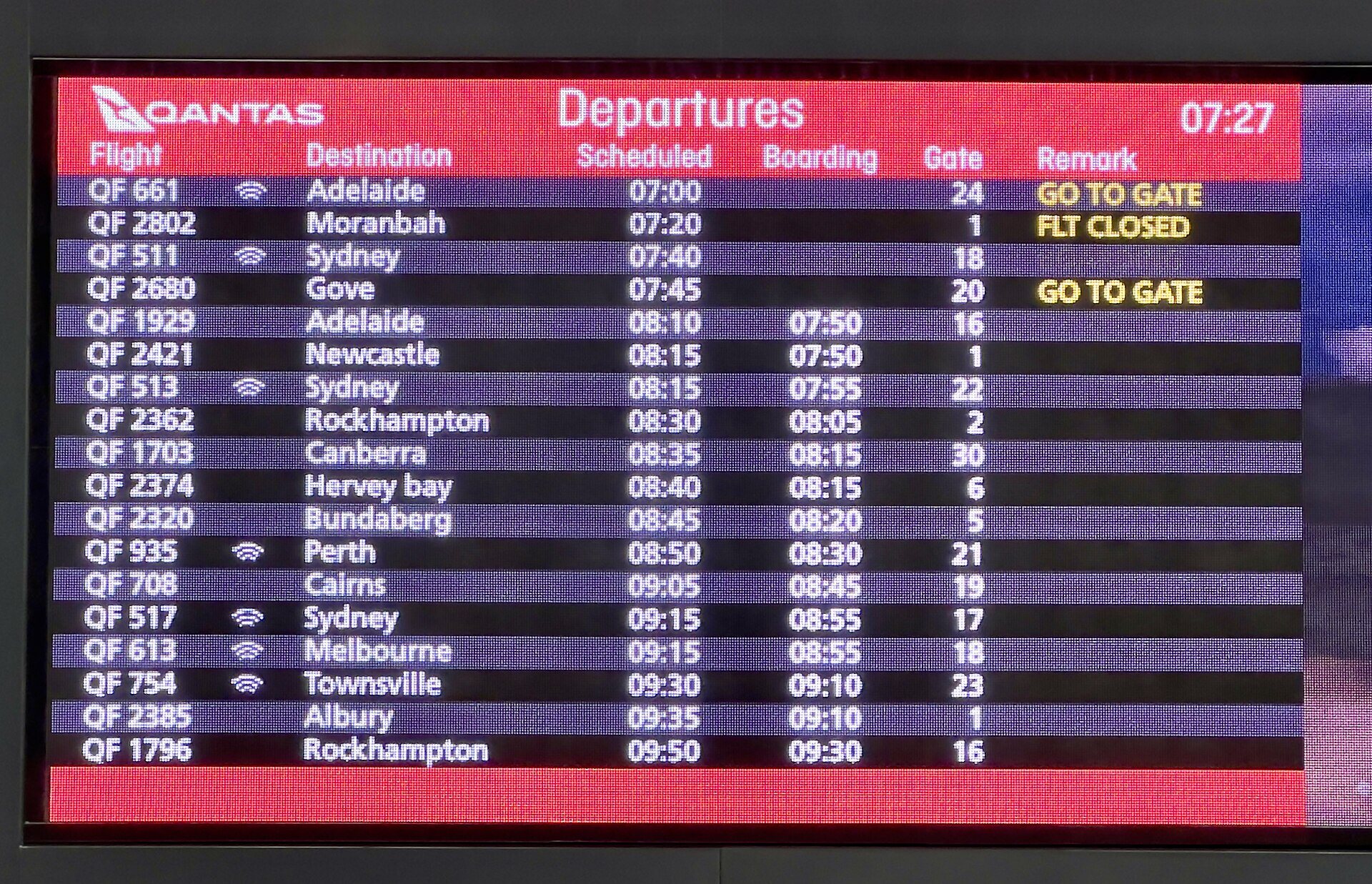
Parametric insurance runs on predefined event triggers verifiable through independent data sources (flight delays confirmed by air traffic radar, cancellations confirmed by weather data). - Mechanism: Instead of the insured starting a claims process, the payout is triggered and paid automatically when the parameter is met. - Impact: As global implementations have shown, 90% of parametric claims are paid in under 24 hours (source: Blink, 2024) — eliminating the bureaucracy and the traveler's headache.
2. Irrefutable Transparency: Clear, Objective Conditions
The nature of parametric triggers demands policies written in clear, objective language. If a flight is delayed 3 hours, the payout is owed. There is no room for ambiguous interpretation or fine print. - Mechanism: Conditions are binary and transparent, verifiable by the insured at the moment of purchase. - Impact: It builds trust and aligns expectations, sharply reducing complaints rooted in misunderstood terms.
3. Proactive, Integrated Support: Assistance Optimized
With parametric payouts automated, the assistance team is freed from transactional tasks and can focus on high-value support: guidance, connection to accredited services, and help with non-parametric events. - Mechanism: An integrated platform can alert the insured to flight status and benefit activation before they even think about filing anything. - Impact: It turns assistance from reactive to proactive, elevating the perception of care and efficiency. Asteroid, for example, offers trilingual 24/7 support (EN/ES/PT) and runs its network through MDabroad, a third-party administrator — which significantly optimizes service.
4. Personalization by Risk Factor: Fair Pricing, Specific Coverage
Parametric models enable pricing based on real risk. The cost of insurance can be tuned with far more granularity — factoring in, say, delay probability on specific routes or the traveler's risk profile. - Mechanism: It enables more niche products, like coverage specifically for flight delays at problem connection airports, or for pre-defined adventure activities. - Impact: Better product fit for the customer, fairer pricing, and lower costs for the insurer by shedding unrelated risk.
Conclusion: The Era of Trust and Efficiency
Travel insurance is not intrinsically broken — it is imprisoned in an anachronistic business and operating model. The rise of parametric insurance is not merely a technological innovation; it is a paradigm shift that recovers insurance's fundamental promise: clear, fast, reliable protection.
The solutions exist and are in operation, as the Asteroid–Blink partnership shows. The industry has the opportunity — and the responsibility — to embrace the transformation.
The Question of Coverage Limits
Beyond bureaucracy, the industry perpetuates another problem: inadequate coverage for expensive destinations. The EUR 30,000 Schengen minimum covers about 25 days of hospitalization in Italy — in theory. In practice, a medical evacuation home from Rome costs EUR 20,000 to EUR 50,000 on its own.
For the USA, anything under USD 250,000 in medical coverage is not travel insurance — it is a false sense of protection. A heart attack with angioplasty and 4 days in the ICU easily exceeds USD 200,000.
Asteroid recommends:
- Europe/Schengen: USD 100,000 minimum
- USA/Canada: USD 250,000 minimum
- South America: USD 50,000 minimum
Ready to experience the difference? Get your travel insurance quote in 60 seconds and see how Asteroid is fixing what the industry broke.
Protect your next adventure
Travel insurance covering 162 countries. Automatic payouts for flight delays. MDabroad TPA 24/7.
Get your coverage — 60 seconds