Dramatic peaks, midnight sun, and rorbuer cabins at the edge of the Arctic.
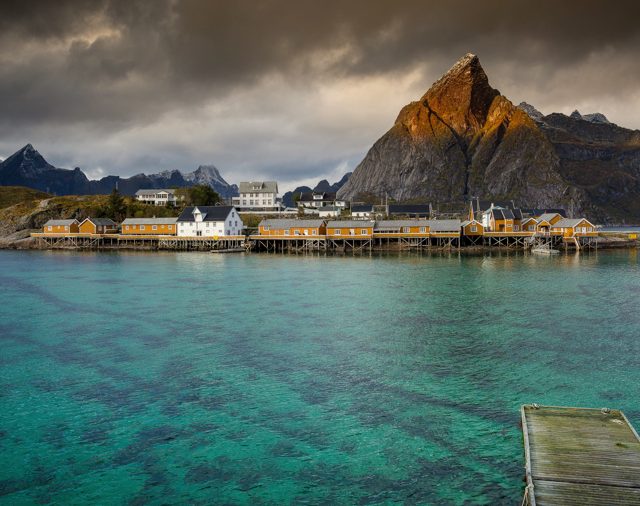
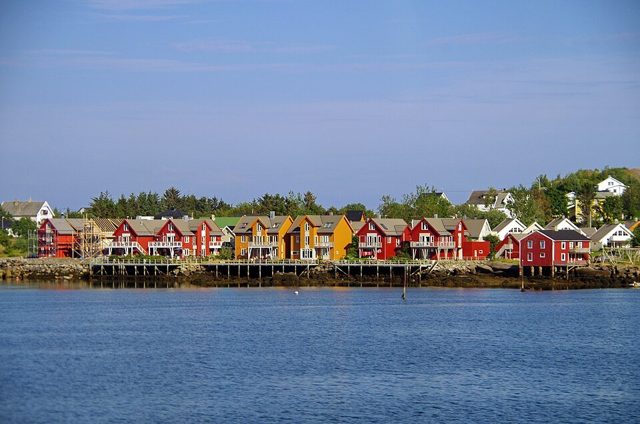
Lofoten is an archipelago of eight main islands hanging off Northern Norway like a detached fragment of Scandinavia that decided to be more extreme than the mainland. The peaks rise 1,200 meters straight from sea level. The fishing villages — Reine, Hamnøy, Sakrisøy — look like they were built yesterday and will look the same 100 years from now. The rorbuer cabins, traditional fishermen's quarters built over the water, still operate as accommodations where you sleep 2 meters above where Vikings used to hunt.
The midnight sun of June through August turns the concept of time upside down. At 11pm, the sun is still bright enough to read. At 1am, it's golden hour light. Sleep becomes optional. Energy becomes infinite. This is not vacation — this is entering a different reality.
We've kayaked the fjords, hiked the peaks, eaten fresh Arctic char within sight of where it was caught, and watched the light circle the horizon at 2am. Lofoten is not on most Brazilian travelers' radars. That's exactly why it matters.
Quick Facts
Reine
The most photogenic village in Lofoten — and the most touristy. Red rorbuer over turquoise water, mountain backdrop, actual fishing boats. Worth visiting for atmosphere but come early morning (6–7am) before crowds. Excellent restaurants. Limited but good accommodation options.
Kabelvåg
Largest town, actual harbor, fish market, fewer tourists than Reine. This is where fishermen actually live and work. Cod fishing industry still active (you'll see the boats). Better budget accommodations. Less Instagram-famous, which means more authentic.
Hamnøy
Smaller, quieter, between Reine and Kabelvåg. Excellent rorbuer accommodations. Perfect for kayaking launches. Less crowded than Reine but still accessible. Traditional fishing village atmosphere with modern comfort.
Kayaking &
Peak Hiking
Lofoten's geography is vertical: water to 1,200-meter peaks with barely any flat ground in between. Kayak the fjords in daylight that never ends. Hike the peaks for views that only get better as you go higher. Both activities are possible in the same day during summer.
Paddle between islands, watch sea eagles, see mountains straight ahead
Half-day and full-day guided kayak tours available from multiple villages. Paddle calm fjord waters between islands, past fishing villages, under 1,200-meter peaks. Wildlife: white-tailed eagles, seals, occasionally orca. The midnight sun means you can kayak at 10pm with full daylight. Rentals available if you're experienced, but guides recommended for first-timers.
Reinebringen (448m, 2 hours) or higher peaks (1,200m, full day)
Reinebringen above Reine is the most popular hike — steep but worth it for views of the village and fjord. Experienced hikers tackle Helvetestinden or Trolltinden for full-day alpine experiences. Trails are marked but can be exposed. Hiking poles recommended. Starting at 5am means daylight the entire time. In summer, you can hike until midnight and still have light.
Sleep in traditional fishermen's cabins, sit on deck over water
Don't just visit Lofoten — sleep inside it. Rorbuer are traditional fishing cabins built on stilts over the water. Modern ones have heating, electricity, bathrooms. You literally watch fish circles under your cabin. Fishing boats pass meters away. Wake at midnight in full daylight and the view is still stunning. Breakfast at 2am is common. This is the essential Lofoten experience. Book 2–3 months ahead for summer.
Where to Eat
World-famous fish burger with a harbor view.
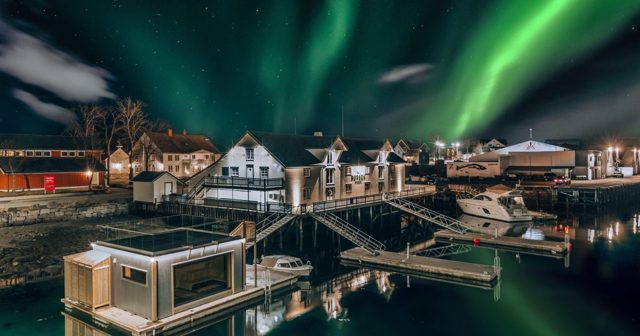

Fresh cod and king crab in a converted warehouse.
Lofoten Must-Dos
These define the Arctic islands. Plan 1–2 days for each.
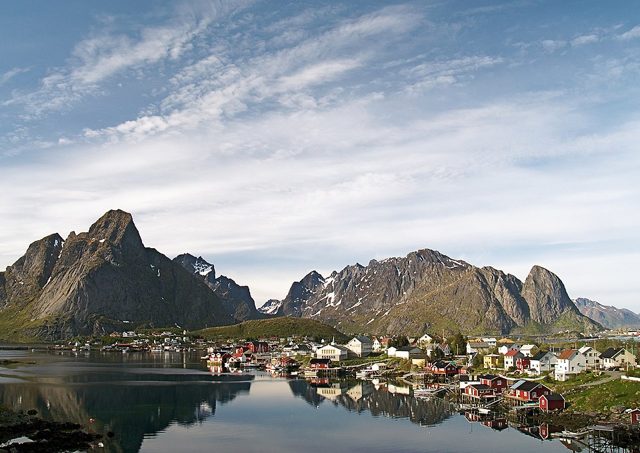
Steep but worth every step. From Reine village, 448 meters elevation. Views of red rorbuer, turquoise water, peaks above. Start early. Afternoon light is golden.
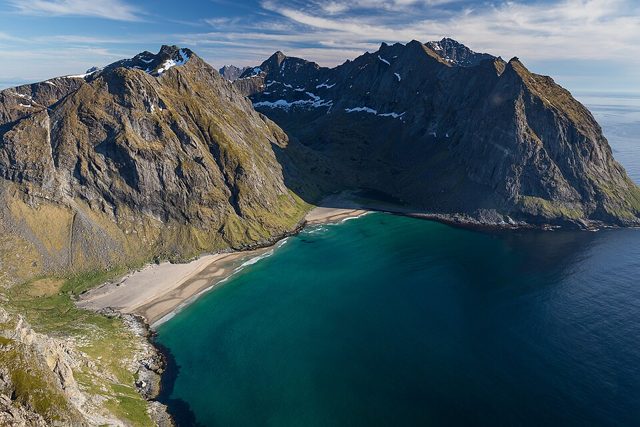
Hike-in only through mountain passes. Turquoise water, black sand, surrounded by 600-meter cliffs. Remote, stunning, worth the effort. Summer only.
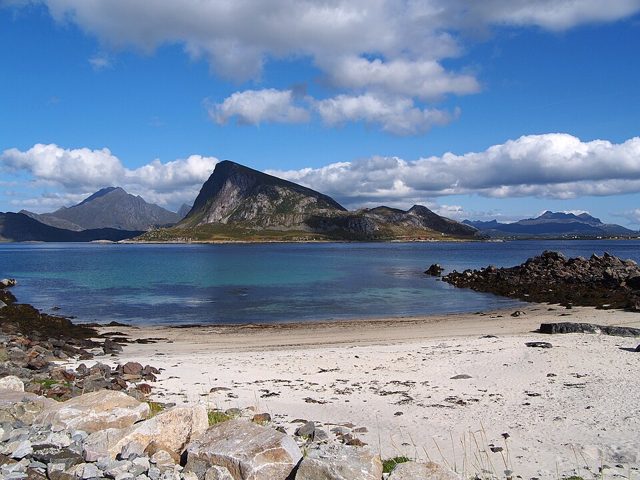
Voted Norway's best. Turquoise water, white sand, mountain backdrop. Dramatic light at all hours. Perfect for sunset. Accessible, no hike required.
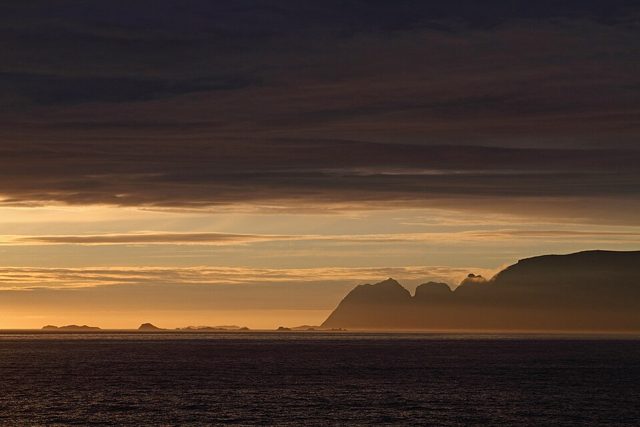
Late May to mid-July the sun never sets. Golden light circles the horizon all night. Hike at midnight. Sleep becomes optional. This is the Arctic at its most magical.
Lofoten on Social
Rorbuer are the authentic choice — traditional fishing cabins over water. Hotels exist but miss the point. Book accommodation 3–4 months ahead for summer. Winter is quieter and cheaper.
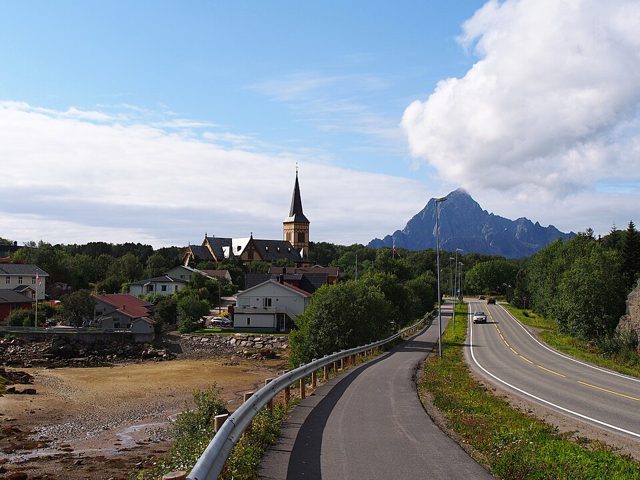
Simple, clean family-run guesthouses. Shared or private bathrooms. Basic but honest. Walking distance from harbor and restaurants. Best value in Lofoten.
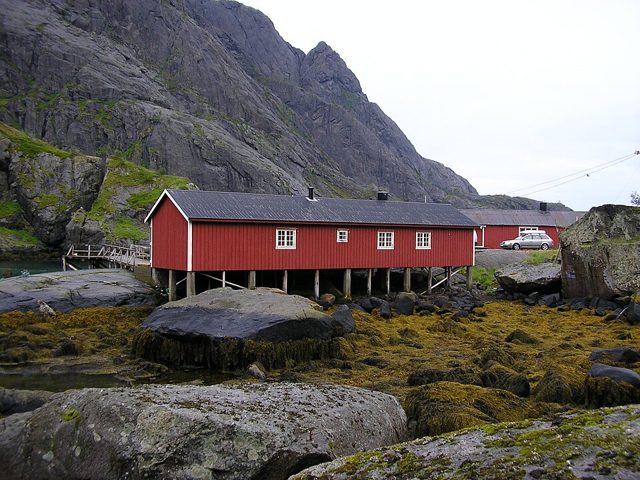
Authentic fishing cabins over water in Reine, Hamnøy, Sakrisøy. Heating, electricity, basic kitchen. This is the essential Lofoten experience. Book months ahead. Some have shared bathrooms, some private.
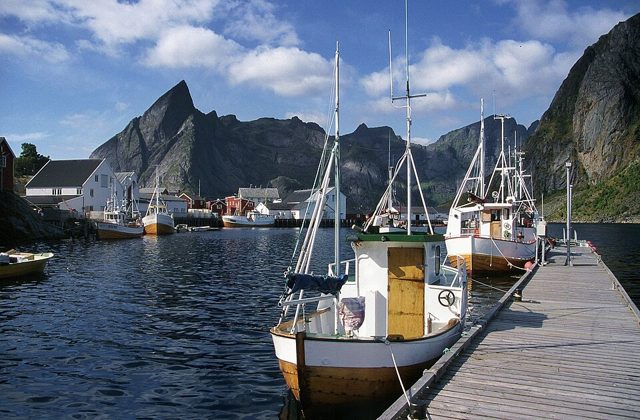
Upgraded rorbu experience: private bathroom, better heating, design elements. Still over water, still authentic feel, plus modern comfort. Excellent restaurants on-site.
High-end rorbu experiences or mountain lodges with floor-to-ceiling windows, spa facilities, Michelin-level restaurants. The ultimate Lofoten immersion.
Getting There
from the Americas
Flights
New York (JFK) and Miami (MIA) have the best connections to Oslo (OSL) via London, Copenhagen, or direct on SAS. São Paulo (GRU), Rio (GIG), and Mexico City (MEX) connect through European hubs to Oslo. From Oslo, take a domestic flight to Bodø (50 minutes) or Tromsø (90 minutes). From Bodø or Tromsø, drive 7–8 hours south through the Lofoten chain on scenic mountain roads to reach the villages. Total journey from the Americas is 20–28 hours including connections.
Getting Around
Rent a car at Bodø or Tromsø — essential for village hopping since public transport is limited to a few daily buses. Ferries between islands are included on the main roads, so there's no extra ferry cost. Summer roads are well-maintained, though June can have some residual snow in high passes. Fuel costs approximately NOK 18 per liter. Parking is free everywhere in the villages. Drive time between villages is 30 minutes to 2 hours depending on location.
Know Before You Go
Schengen visa required for most LATAM nationals — apply at the Norwegian, Swedish, or Danish embassy in your country. Summer only (June–August) for midnight sun and all activities. This means 24-hour daylight, so bring a sleep mask. Scandinavian pricing is expensive. Best months are June–August for hiking, kayaking, and midnight sun, or December–January for Northern Lights (aurora hunters only). Bring layered clothing for cool summers (12–17°C).
You might also like
Iceland
Sort out the boring part in ten minutes — and enjoy the rest without surprises.