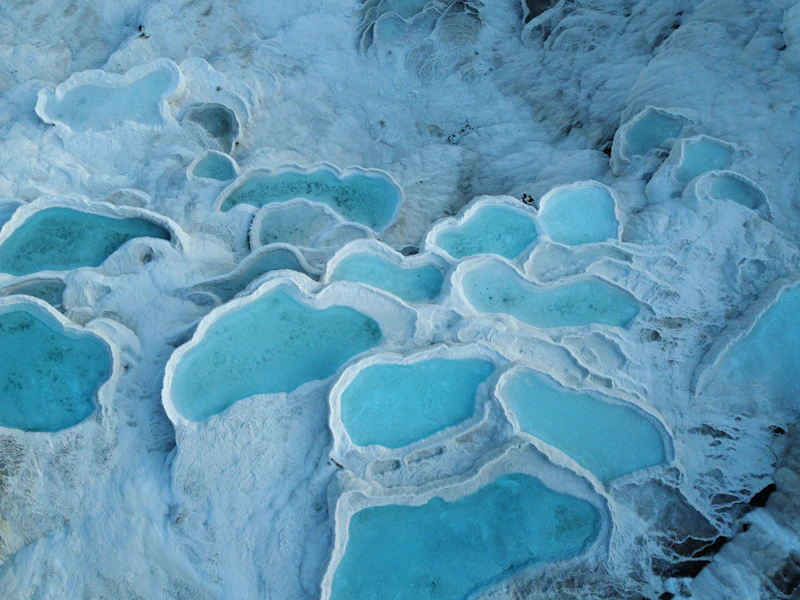
The world's largest salt flat is not a landscape. It's a concept that somehow became geography.
Salar de Uyuni is 10,582 square kilometers of salt. It's so flat that a salt flat has only one natural feature: the horizon ceases to exist. The sky reflects in standing water. The ground reflects in sky. Your sense of up and down becomes unreliable. This isn't metaphor. This is how your brain experiences Uyuni.
The "mirror effect" (February–April) happens when seasonal rains create a millimeter-thin layer of water across the salt. The reflection is so perfect that photographers have to resort to creative tricks to make images look real. Travelers have to resort to faith that they're not falling up.
The "stargazing season" (June–October) is when the sky is clear and the Milky Way is so visible that it casts shadows. The stars are not metaphorical. They are geographical features. You can navigate by them. They are brighter than some street lamps.
The altitude is 3,656 meters. Acclimatize in La Paz before coming. The tours are 3 days, 4x4 vehicles, basic accommodation. The price varies from USD 80 (budget) to USD 300+ (luxury). The experience is indescribable and therefore worth the journey.
Quick Facts
Where to Eat

Contemporary Bolivian five-course tasting menu.
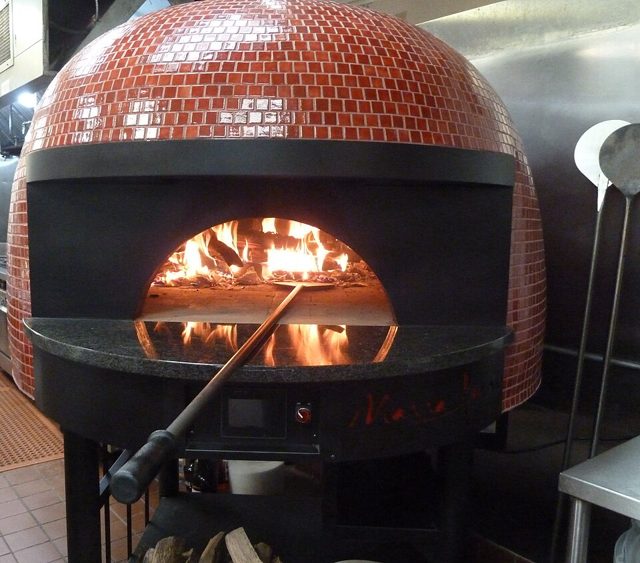
Wood-fired pizza, traveler favorite after salt flat tours.

Warming llama steak and quinoa soup, backpacker staple.
The Essential Experiences
What you actually came for. All included in standard 3-day tours.
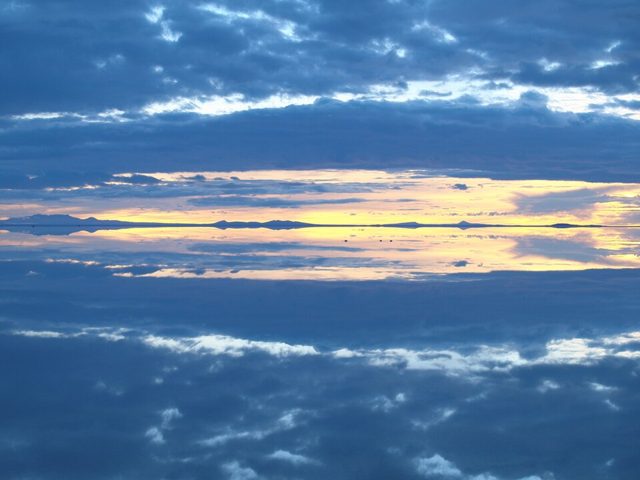
December–April the salt flat becomes a perfect mirror. The most surreal photograph on Earth. Sky and ground become indistinguishable. Your brain will reject what your camera captures.
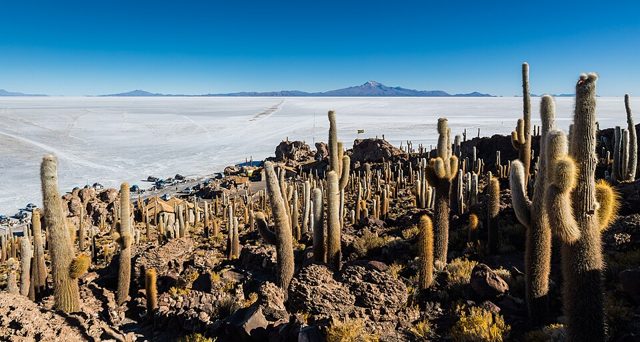
Rocky outcrop covered in giant cacti (10 meters tall) rising from the white salt flat. Climbable, strange, and your only shelter for 100 kilometers in any direction.
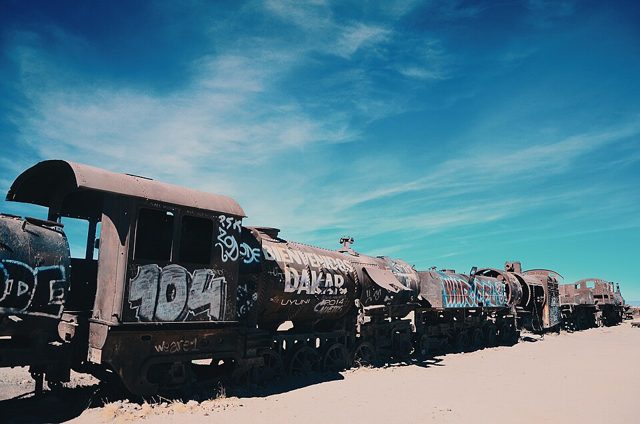
Rusted 19th-century train carriages scattered on the outskirts of Uyuni. Eerie, photogenic, climbable. The industrial ghosts of Bolivia's mining past, perfectly framed against white salt.
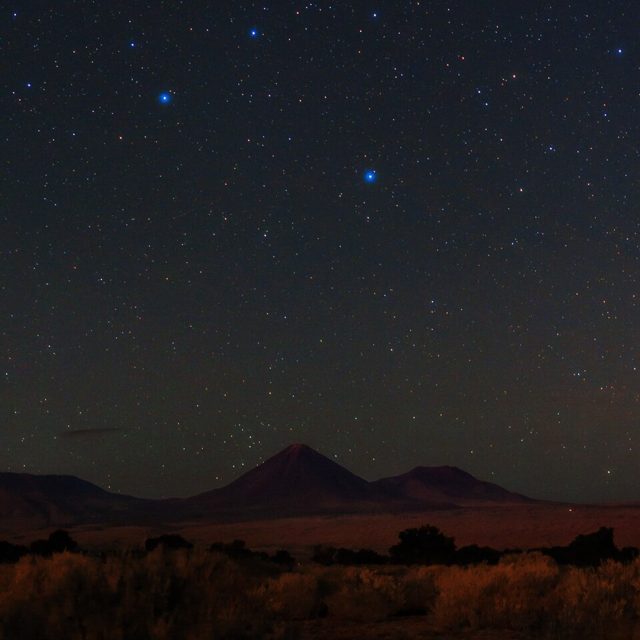
Zero light pollution means 1,000+ visible stars. The Milky Way casts shadows. June–October is prime season. This is what the night sky looks like when there's nothing to block it.
Where to Stay
Most nights on the salt flat itself. Base camp options in Uyuni or La Paz before/after the tour.
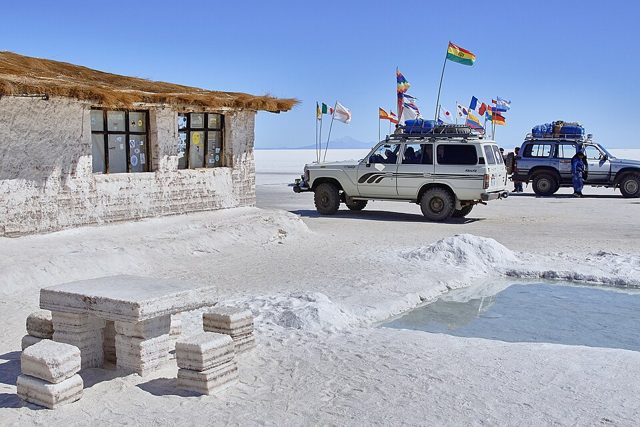
Sleep on the salt flat in a basic hotel made of salt blocks. Charming in its surreality. Included with most tours. Basic but the uniqueness compensates.

Pre-tour base in Uyuni. Dorms and private rooms. Social atmosphere. 2–3 nights here to acclimatize before the tour.
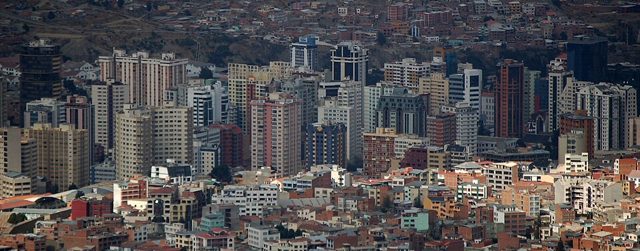
Better comfort in La Paz before heading to Uyuni. Modern, safe, with restaurant and good breakfast for altitude acclimatization.
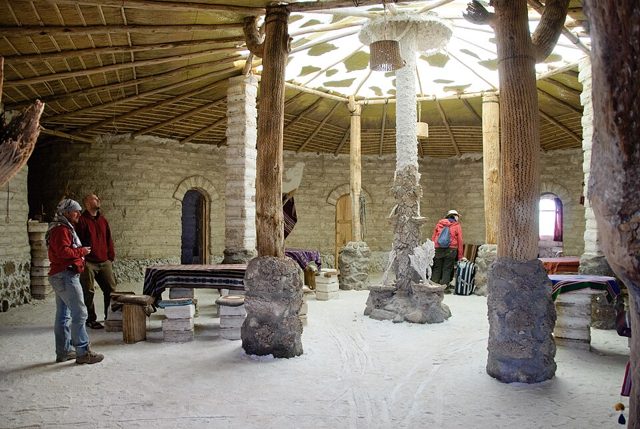
Upscale salt hotel with better rooms and heating. Part of premium tours. Sleep on the salt with actual comfort.
Getting There
from the Americas
Flights
Lima (LIM) offers the shortest route to La Paz (LPB) at just 2 hours. Miami (MIA) connects to Lima or Bogotá. São Paulo (GRU), Rio (GIG), Buenos Aires (EZE), and Santiago (SCL) have direct flights to La Paz. From La Paz, fly domestic to Uyuni in 90 minutes (USD 60–100), or take the bus from La Paz (10 hours, USD 20–40) to save money. This is the most accessible salt flat to reach from anywhere in the Americas with one main hub.
Getting Around
All exploration of the salt flat happens via organized 3-day 4x4 tours — you cannot self-drive on the salt flat. Tours depart from Uyuni or La Paz daily, cost USD 100–350 per person depending on comfort level, and include the vehicle, expert guide, accommodation on the salt flat, and all meals. The Uyuni town itself is walkable and full of tour operators. Tours can be booked directly or through any hostel in Uyuni or La Paz.
Know Before You Go
90-day visa-free for US, Canadian, and most LATAM nationals. Altitude is 3,656 meters — acclimatize in La Paz for 1–2 days first by drinking coca tea and avoiding alcohol. Altitude sickness (soroche) is common but manageable. Best February–April for the mirror effect (when water reflects the sky perfectly) or June–October for stargazing (clear skies, 1,000+ visible stars). Nights drop to -5°C, so bring thermal layers and sunscreen for intense daytime sun.
You might also like
Patagonia
Rafaela was on day two of the 3-day tour when the vehicle had a mechanical failure. Evacuation off the salt flat was the only option. Asteroid paid for the helicopter evacuation in full, no questions asked.
Sort out the boring part in ten minutes — and enjoy the rest without surprises.